more info
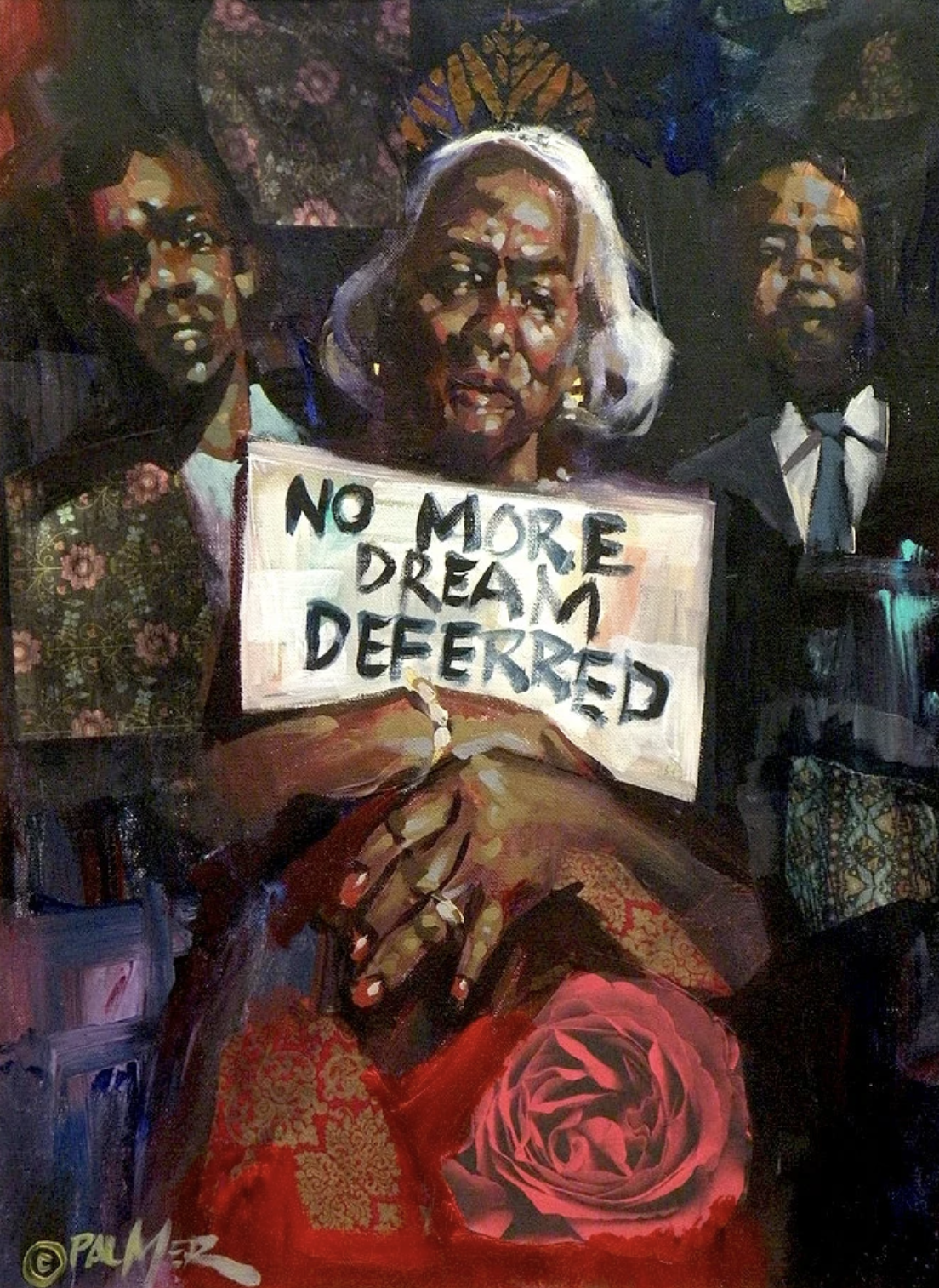
In “Harlem,” Langston Hughes asks one of American poetry’s most famous questions: what happens to a dream deferred? This question echoes throughout American culture, from Broadway to Dr. Martin Luther King Jr.’s speeches. It would not be an exaggeration to say that every time the “American dream” is invoked, Hughes’s question is there, asking what that dream is, what conditions make it possible, and why for so many it seems little more than a trap, or an illusion, or a promise that no longer meaningfully obtains. Today, Americans can hear the question in the political language of the Deferred Action on Childhood Arrivals (DACA) program and the DREAM Act. More basically, it resounds in the stories of people who, by accident of birth or fate, find themselves thrust onto a precarious margin. For many who struggle daily toward a more livable life, the question persists.
The composition and reception of “Harlem” suggest it is no accident that dreaming and deferral are so entwined in the civic discourse of the contemporary American moment. In fact, though readers now tend to consider “Harlem” as an isolated, standalone anthology piece, Hughes initially conceived it as one part of a longer, book-length sequence of poems exploring black life in Harlem. Hughes eventually titled this book Montage of a Dream Deferred (1951). In addition to “Harlem,” Montage contains several of Hughes’s most well-known poems, including “Ballad of the Landlord” and “Theme for English B.” But the sum is greater than the parts. In all, Montage is made up of more than 90 poems across six sections that continually return to, riff on, and worry the question of what happens to a dream deferred. “Harlem” is the first of six poems in the final section, “Lenox Avenue Mural,” after the main north-south thoroughfare that runs through upper Manhattan. By reading “Harlem” back into Montage of a Dream Deferred, we can appreciate the full measure and range of its possible meanings.